
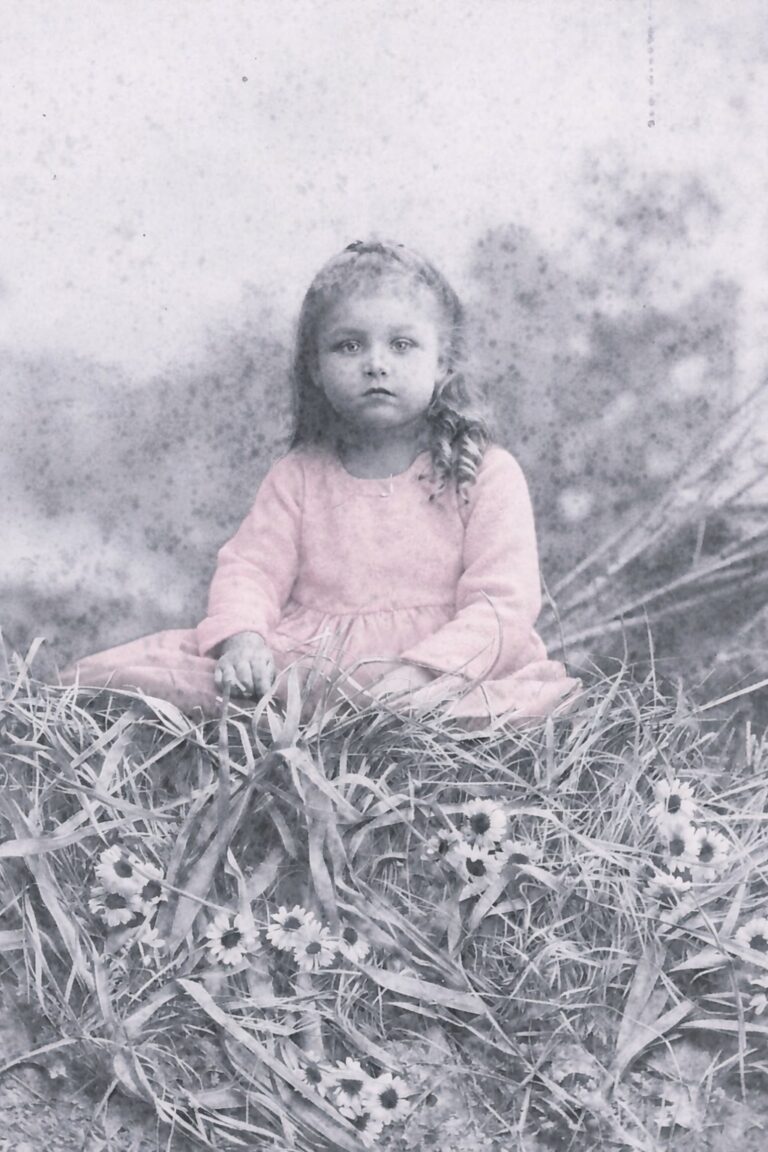
Old newspaper articles often contain a wealth of information about our pioneering families, providing valuable insight into their lives, their struggles, and their adventures. Like so many of the old articles they also contain errors, exaggeration, misspellings, and contrived timelines which distort and sometimes ignore the actual history.
Such is the case of this delightful little story found in the The Idaho Statesman, Sun, Aug 07, 1932, Page 12 which carried the headline, “Pet of Princess Winnemucca Long Resident of Boise Valley”, written by Mrs. E. W. Turner. When the story is examined more closely, we find a rich history of both Oregon and Idaho to be teased from between the lines.
Editorial comments are contained within [ ]. The article begins, leading with this heading:
Squaw’s Devotion to Little White Girl Shields Her from Redskins’ Wrath
A little Oregon Trail baby lay asleep in an ammunition wagon drawn by a team of stubborn mules driven by her mother. That was Mrs. John Hammack on a June day in the year of 1869, only then she was Amber Cooley, granddaughter of John Manwaring, captain of a train of 100 covered wagons on the long weary journey from Illinois to the far west.
[Amber Cooley was born 13 Apr 1868 in Illinois to Charles Edward Cooley 1842-1919 and Margaret Lucy Manwaring 1848-1885. Margaret’s father was John Manwaring, who led the wagon train, accompanied by his wife Amy, their ten children, and other families along the Oregon Trail in 1869. The “100 covered wagons” was only 3 at the beginning, later as many as 19, and as with most wagon trains the number fluctuated as families joined the train, turned back, or split from the train for different destinations.]
Near Laramie buffalo were sighted. Amber’s uncle caught up his rifle and disappeared over a rise of ground. Immediately someone sent up a warning shout, “Redskins!” and Captain Manwaring gave the familiar order to “circle” for protection. After the skirmish with the Indians, the wagon train waited for the return of Amber’s uncle.
[Amber’s aunt Sarah Alice Manwaring, 1854-1928, wrote about that event in her memoirs, stating, “Thursday morning the antelope were quite thick. They ran up to the wagon and my brother took his carbine and said he was going to have one of them. The other boys did the same. We girls and my sister-in-law drove the teams. Father and a boy 16 years of age was all that was left in the wagons to drive slowly along. All at once my sister looked out of the wagon and saw lots of men on horseback and she told father they were soldiers and he made the expression, “Soldiers be damned, Indians!” Just before she saw them all the others had come back to the wagons except my brother Tom. Father waved his hat for my brother to come but he went on over the hill and that was the last we ever saw of him. This woman that came to the train said to just hang out a flag of truce and give them some sugar and they wouldn’t hurt anyone. Father told her to shut up or out she would go. We traveled on and the Indians circled around us three times but didn’t get anyone else or anything but my only brother. Well, we traveled on until about four o’clock without stopping and we came in sight of a wood choppers camp and there were two blood hounds chained to their tents. We camped as close as we could until the men folks came. There were eight of them. When we told them what had happened and about my brother they said they had not seen any Indians for a long time and they didn’t know where they came from. We told them of the woman with us and they said that she was a spy. We stayed three days at the wood choppers camp and then six soldiers came along that night and we told them of our loss and they were looking for six deserters and they came back the next day with them. They found them under an old Government wagon box. We passed the same box but never saw anyone. On Saturday and Sunday the soldiers and wood choppers hunted all over the same grounds where my brother was missed but they could never find any trace of him. They found an Indian medicine bag and they said my brother-in-law, when he shot, must have hit one of the Indians. In the meantime, while we were camped one Sunday evening, there came 14 more wagons to travel with us. This made 19 wagons. It was on the 23rd day of May 1869 that my brother was captured.” (Her full memoir can be found under Further Reading at the end of this story)
That date, 23 May 1869, is found in all records associated with Thomas Robert Manwaring… in Ancestry records, FindAGrave, etc., as if the day her “brother was captured” was the day that he died. But that was the day he disappeared, and no one knew for sure what became of him. Then, I came upon a rather cryptic note written by Gayle Wallace after a visit to Esther McDonald and Jessie (Harris) Deardorff in 1994 where she wrote, “Thomas Robert Manwaring was thought to have been killed by Indians on the trail West on May 23, 1869. According to family still living in Prairie City, Esther and Jessie said he deserted his family, leaving his wife and three small children with his parents on their way West. He returned to New York and remarried. Years later two of his daughters, from New York, visited people here in the Valley (Canyon City, John Day & Prairie City), and told them about it. This has not been researched it is just something that has been passed.” To date, no one else has mentioned who the “two daughters” might have been.
A version closer to the truth is revealed in Jae Carvel’s Secrets from the Mountain. There, she relates how Amber’s aunt Sarah (Sarah Ann Hunt, 1837-1898, wife of the missing Thomas), in her later years, made a trip to New York to visit her mother and family. Sarah’s sister Eva had someone she wanted to see and took Sarah to a dry cleaner’s shop where a man was working who looked remarkably like Sarah’s lost husband Thomas. They left the shop, both of them wondering about the strange resemblance. Sarah couldn’t resist and returned to talk with the man alone. As Jai tells the story, “Sarah Ann studied his eyes until she was quite sure that Robert Main [sic] was Thomas Manwaring.” And then, making a decision she would carry in her heart until her death, she told him she was a happily married lady from Oregon just visiting family and abruptly left. She told Eva that there was a remarkable resemblance, but it was not Thomas.
The story is revealed years later in the final entry of Sarah’s diary, after a period of illness, which reads, “I have spent the last three months recovering and trying to be my old self. But I know my time is growing short. I have happily lived with the lie since my trip to New York. My decision is still the same. No one will ever know the truth of the desertion of my first husband. I have helped my daughters grow up to be strong and independent. They will never be devastated by a man. I have shared the treasure of Thomas Meador, the man who committed himself to me for life, for the life that will soon end for me.”
It was her intention to burn that last passage in the cook stove, which is where Thomas found her collapsed upon the floor in front of the stove, her secret clasped in her hand, unburned.]
Returning to the “Pink Dress…”
But the journey had to be resumed without Thomas, for no slightest trace of his fate was ever known. At Laramie was “Buffalo Bill.” The famous scout personally conducted the train as far as the Wyoming border. More than once he held the baby Amber on his knee, to caress the youngest child of that pilgrimage.
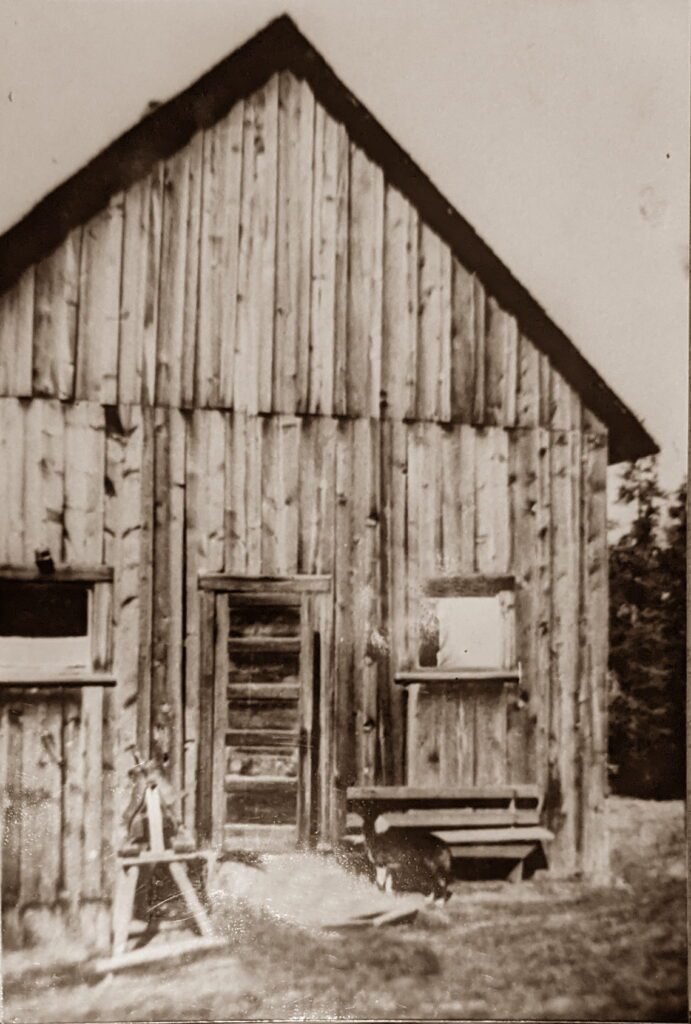
At the head of the John Day valley, in Oregon, the creaking wagons came to a final stop, and the families scattered to take up homesteads and exchange the hardships of the trail for the hardships of wresting food and shelter from a new land. On the wide acres where her grandfather planted the apple seeds he had brought from “home” Amber Cooley grew to girlhood . Nearby was Prairie City, with its general store where supplies were received from Portland . Here, too, was the fort where the settlers took refuge when the Bannacks and the Piutes went on the war path.
[Indeed, Amber’s parents, Charles and Margaret (Manwaring) Cooley, filed their land patent in 1876 on a corner section of land on the west bank of the John Day River, just southeast of where the future Riverside School would be located.]
“Wear Pink, Always”
“You ‘fraid of Injun bucks, Amber?”
“No!” denied the little pioneer girl, stoutly.
“Then climb up behind me and I take you to the big woods and we get pine gum!”
Amber accepted the invitation, because she wanted to ride the spotted pony, and her mother wasn’t at home to forbid her going away with the Indian squaw. “Sally Sweetwater” was pleased, for the little girl in the pink dress was her favorite of all the children in the settlement . In fact Sally was responsible for the pink dress . Had she not gone all the way to Prairie City to buy 20 yards of pink calico and brought it to Amber’s mother with the instructions, “She wear pink, always”? This day they rode far into the pine woods after the coveted chewing gum . Presently Sally chuckled .
Never Molested
“You no see them?” Heap plenty bucks hiding up there . I show you off to them . They not bother you when you wear pink dress!”
That summer an Indian war broke out, and the settlers stayed two months in the fort. But the “little girl in the pink dress” came and went as she pleased, carrying water and picking strawberries for the families that remained inside the stockade . She never was molested . She recalls, now, that Sally Sweetwater, the daughter of Chief “Winnemuc”, must have been a “considerable” diplomat, for she acted as interpreter for many moons between General Howard at Fort Logan and her own tribe . She was young, and loved finery.
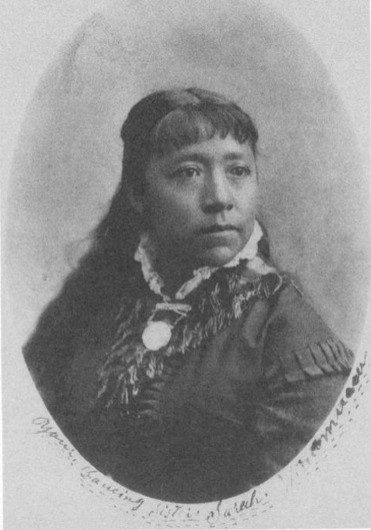
Sarah Winnemucca, 1879
Photo from an excellent article by Joanna Cohan Scherer
“The Public Faces of Sarah Winnemucca”
Cultural Anthropology, Vol. 3, No. 2 (May, 1988), pp. 178-204 (27 pages)
Also viewed at JSTOR – http://www.jstor.org/stable/656350
This article is essential reading for those interested in the life of Sarah Winnemucca as it discusses the “studio” portraits often used in articles about her life, along with an in-depth analysis of how she promoted her own “Indian Princess” mythology by using princess imagery to open the political doors which enabled her to fight for Indian rights and sovereignty. The photo above is rare in that it shows her without the typical Indian garb she used in most photos to promote herself.
[It is unknown how the author of this news article came up with the name “Sally Sweetwater”, though it may have been from Amber’s future husband who used the name in his autobiography. However, it is clear she is referencing Thocmetony (Shell Flower) Sarah Winnemucca, the noted advocate for Indian rights. The Cooley family and Sarah Winnemucca were indeed friends. In Sarah’s own autobiography, “LIFE AMONG THE PIUTES: Their Wrongs and Claims” she wrote, “In the winter of 1878, I was living at the head of John Day’s river with a lady by the name of Courly” (Her spelling of Cooley. There are numerous examples of her misspelling the names of places and people).
This was also the year the Bannock War started. In “Sarah Winnemucca” by Sally Springmeyer Zanjani, she stated, “During the months that preceded these events, the suffering Indians at the Malheur Reservation had gone to see Sarah several times at the Cooley ranch where she was working…”. The “events” she mentioned were a confluence of circumstances that had pushed the Bannocks over the brink, including the cruel treatment by the hated Indian agent Rinehart at the Malheur Reservation, and starvation. By June of that year, still living with the Cooley’s, the plight of the Bannocks was so severe that the tribesmen traveling from the Malheur Reservation to the Cooley Ranch finally convinced Sarah to go to Washington and plead their case to President Rutherford B. Hayes. While there are many books written about the Bannock War, a study of those events would be sadly lacking if it did not include the Indian perspective as outlined in both Zanjani’s “Sarah Winnemucca” and Sarah’s own autobiography.]
Always Pioneers
A garrison of United States troops was stationed at Prairie City [Camp Logan, on Strawberry Creek south of Prairie City]. Among the “home guard” was a tall young chap of 18, John Hammack by name. He had crossed the plains in a covered wagon just a year after Amber Cooley had traveled the trail. He, too, had tried homesteading, but was more interested in cow-punching, soldiering, and mining. Then romance took a hand in the game, and these two were married when Amber was but 16.
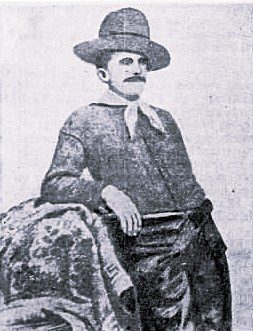
[In John’s autobiography he wrote, “Sally Sweetwater, Indian princess, coming into Prairie for her tribe, grew to think there was no one quite like brown eyed Amber Cooley. She brought her beads and blankets and called her White Fawn. It was during Amber’s few trips to carry messages to Sally and thus to the tribe that I grew to know the Prairie City girl. I was still acting as scout, and I was elected to see that no one was to receive harm from the Indians. My duty watching Amber was the greatest pleasure.”
The children of pioneers, they have never ceased pioneering themselves. For 10 years John and Amber continued to live in Oregon. Four children were born to them there: Joe, Grace, Berlin, and Mary. Four more were added to their family after they came to the Boise valley: Kate, Bryan, Helen, and Nola. For 40 years they have lived in South Boise. All of their children are living, all are married, and 10 grandchildren have joined the family circle. This article is written in advance of September when they will celebrate their golden wedding anniversary. Mrs. Hammack is still young in spirit, and John Hammack’s dimming eyes still see the lure of gold in the Boise hills.
[John’s own autobiography tells the story of his youth, how he came to live in Oregon, and his adventures during the Bannock War, as a stage driver, and miner. His own story also details the life of his family once they had moved to Idaho. To follow their story after their adventures and life in the John Day Valley see the link to his autobiography below.
A sweet story of a pink dress, a little girl, and the Indian woman who befriended her. While its intent was as a prelude to the 50th Anniversary celebrations of a couple so well respected in the Boise area, for those of today researching our pioneering families, it provided a remarkable example of how these old news articles can reveal a deeper understanding of the life and times of our ancestors.]
Further Reading:
Sarah Alice Manwaring‘s remarkable chronicle of the family’s journey on the Oregon Trail can be found here:
John T. Hammack‘s autobiography was also originally printed in the Idaho Statesman and the transcibed version is now available here:
https://oregontrailgenealogy.com/autobiography-of-john-t-hammack-oregon-idaho-pioneer/
Sarah Winnemucca – Her own autobiography
“Life Among the Piutes: Their Wrongs and Claims.”
By Sarah Winnemucca, 1844?-1891.
Edited by Mary Tyler Peabody Mann, 1806?-1887. [“Mrs. Horace Mann”.] Boston: Cupples, Upham and Co.; New York: G.P. Putnam’s Sons, 1883.
https://digital.library.upenn.edu/women/winnemucca/piutes/piutes.html
“Sarah Winnemucca” by Zanjani, Sally Springmeyer, Lincoln: University of Nebraska Press, 2001
https://archive.org/details/sarahwinnemucca0000zanj/page/n5/mode/2up
Scherer, J. C. (1988). “The Public Faces of Sarah Winnemucca“. Cultural Anthropology, 3(2), 178–204. A full analysis of her life and efforts to promote herself through the use of the “Indian Princess” mythology.
http://www.jstor.org/stable/656350
Title photo from personal collection, unknown little girl, colorized with AI