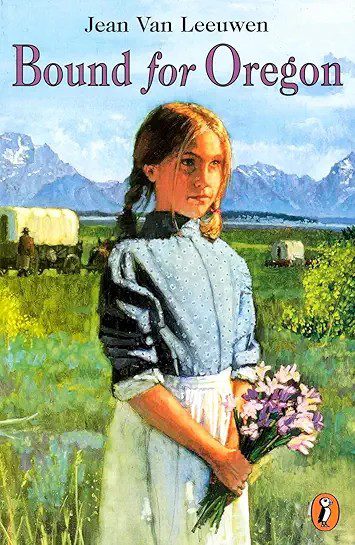
The history of the Oregon Trail is taught at the 4th grade level at my daughter’s school. I’d helped my son with his assignments when he was in the 4th grade, and now it was Sailor’s turn. One of the assignments was to choose a book on the Oregon Trail and write a report about it. Sailor chose “Bound for Oregon” by Jean Van Leeuwen. I asked her how she came to choose that book and she said she “wanted a book about Oregon” and “it had to be a chapter book.” Then she added, “… and the girl on the cover sort of looks like me when I wear my hair in pigtails.” It was only later we would discover the significance of that observation.
Because of my years researching the Oregon Trail, we turned her assignments into father/daughter tasks. We read “Bound for Oregon” aloud, a story about a little girl crossing the Trail with her family in 1852. While Sailor seemed captivated by the story, I found myself comparing the story to what I knew of immigrants making that arduous journey. As the story of Mary Ellen Todd’s experiences unfolded, I found myself impressed with the accuracy of her remembrances. Not only did the description of the journey align with other memoirs I had read, but the story also clearly revealed the emotions experienced by thousands of immigrants; heartache at leaving family behind, fear, wonderment, and hard-earned joy.
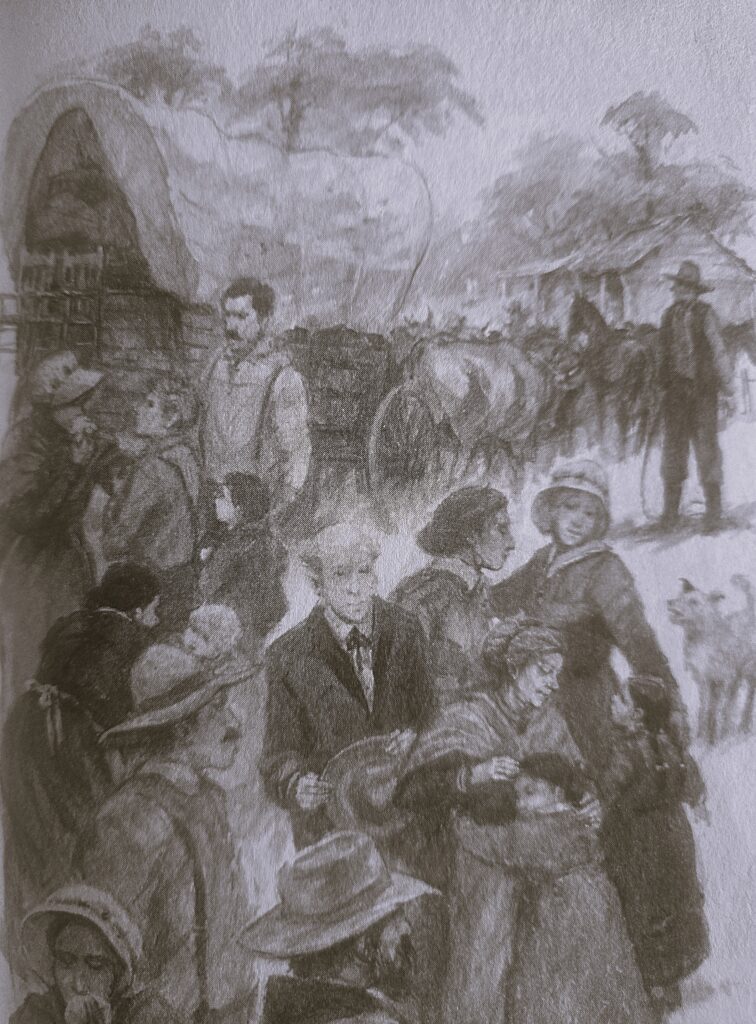
Charcoal drawing in Bound for Oregon
Sailor and I read Mary Ellen’s recollections, dad interrupting the story often with explanations about the wagons, oxen, finding food, Indians, the weather, disease, distance, river crossings… all the little details of this most remarkable walk across 2000 miles of wilderness. We had that rare moment when doing homework with a child where, never once, did she ask, “Are we done yet?”
We reached the end of the book, I turned the final page, and there, notes from the author. Jean Van Leeuwen tells of finding the story and how the story was, in fact, based on a true story. She told of the Todd family, and how Mary Ellen so vividly recalled the adventure. Mary Ellen told the story to her children and others and eventually wrote it all down. It was Mary Ellen’s manuscript that Jean Van Leeuwen had found and then brought forward as “Bound for Oregon.” Reading the author’s notes, suddenly, the surname Todd lit up in my mind.
Turning to my own Ancestry tree I searched, and yes, there was a Jane Todd, married to Patrick Shields. I had already written about the Shields family in my story “Two Families, One Common Ancestor, Two Hundred Miles Apart“. And so, I began researching Jane Todd, her parents, grandparents, and on…
Simultaneously, I researched Mary Ellen Todd, her parents, grandparents, and on… Several generations back the family lines of Jane and Mary Ellen intersected. The little nine-year-old girl walking the Trail in 1852 (the exact age of Sailor as she read about Mary Ellen) was family. Sailor’s distant cousin. Her comment that “the girl on the front cover” of Bound for Oregon “looks like me” had familial merit.
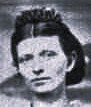
Mary Ellen’s remembrances were true, and vividly accurate. Her family made it to Oregon and initially settled around Lookingglass, in Douglas County. At the age of 14 she married John Pound Applegate.
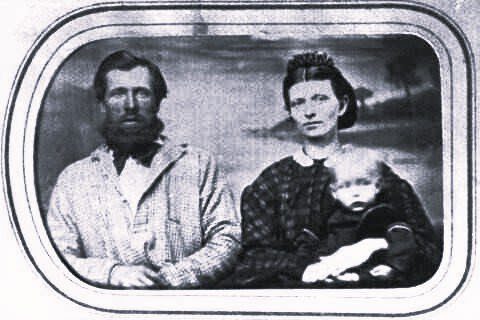
Another family connection was revealed when we look at John Applegate, for it is not a stretch at all to think of the famed Applegate Valley of southern Oregon. Indeed, John is a cousin of the original Applegate brothers who traveled to Oregon in 1843.
“The Applegates were one of Oregon’s most influential early pioneer families, a fact reflected in the landscape. They have a river, a valley, a mountain, a trail, and a town named after them.
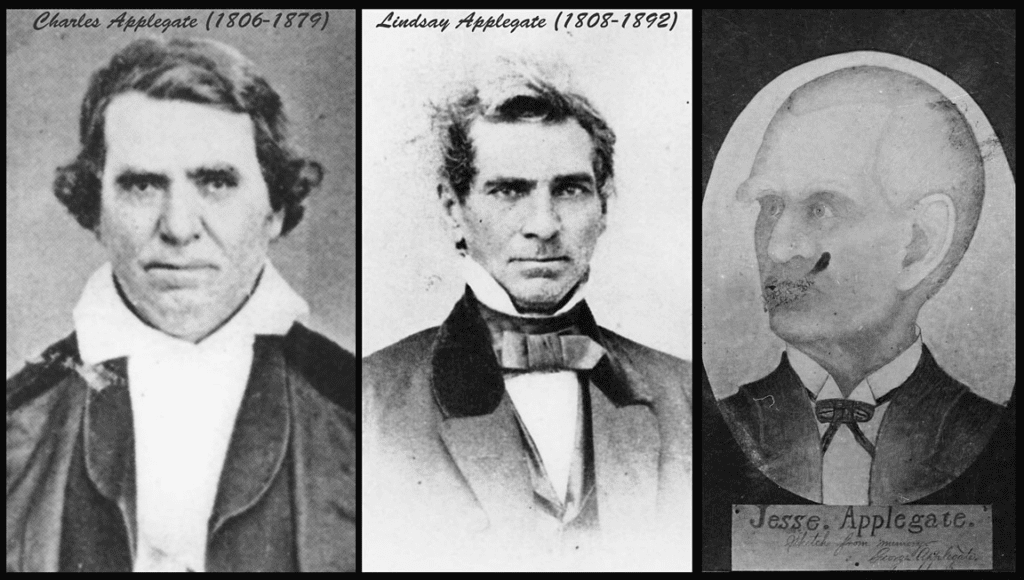
The history of the Applegates in Oregon begins in May 1843, when three brothers — Charles (1806-1879), Lindsay (1808-1892), and Jesse (1811-1888) — and their families left Missouri in search of new lands and new opportunities. The Applegates joined hundreds of other American men, women, and children on an epic transcontinental journey to the Oregon Country known as the Great Migration of 1843. Jesse Applegate, the youngest of the three brothers, led the so-called “Cow Column,” which consisted of the families with large herds of livestock.
The Applegate brothers settled in the Willamette Valley, joining a small but growing community of American settlers. In 1844, Jesse surveyed the townsite of Oregon City, the first incorporated American municipality west of the Rocky Mountains. The following year, he played an important role in the development of the provisional government, helping revise the organic law, Oregon’s first constitution.
Perhaps the best known accomplishment of the Applegates during their first few years in Oregon was Jesse’s and Lindsay’s role in the 1846 exploratory expedition that identified a new route into Oregon from the south, which came to be known alternately as the Southern Immigrant Route, the Scott-Applegate Trail, and the Applegate Trail.
In 1849, Jesse Applegate left Polk County for a place he named Yoncalla in the Umpqua Valley. Charles and Lindsay followed the next year. Charles and Jesse stayed in the Umpqua Valley until their deaths in 1879 and 1888 respectively. After serving several years as Indian agent for the Klamath Reservation, Lindsay retired to Ashland in 1869, where he lived until his death in 1892. All three brothers had large families, and many of their descendants continue to call Oregon home.” (Oregon History Project)
John and Mary Ellen had thirteen children, and they eventually moved from southern Oregon to the area of Monroe Creek, north of Weiser, Idaho. John died young at the age of 45 and Mary Ellen went on to marry Lyell Verbeck, living out her life in Idaho until her death in 1924 at the age of 81. She is buried in New Plymouth, Idaho.
The Douglas County Museum in Roseburg, Oregon holds several of the Todd family possessions, including pottery made by Mary Ellen’s father. Bound for Oregon’s opening chapter begins with Mary Ellen standing by her father at his potter’s wheel as he tells her of his decision to go to Oregon. Another item at the museum is her mother’s butter churn.
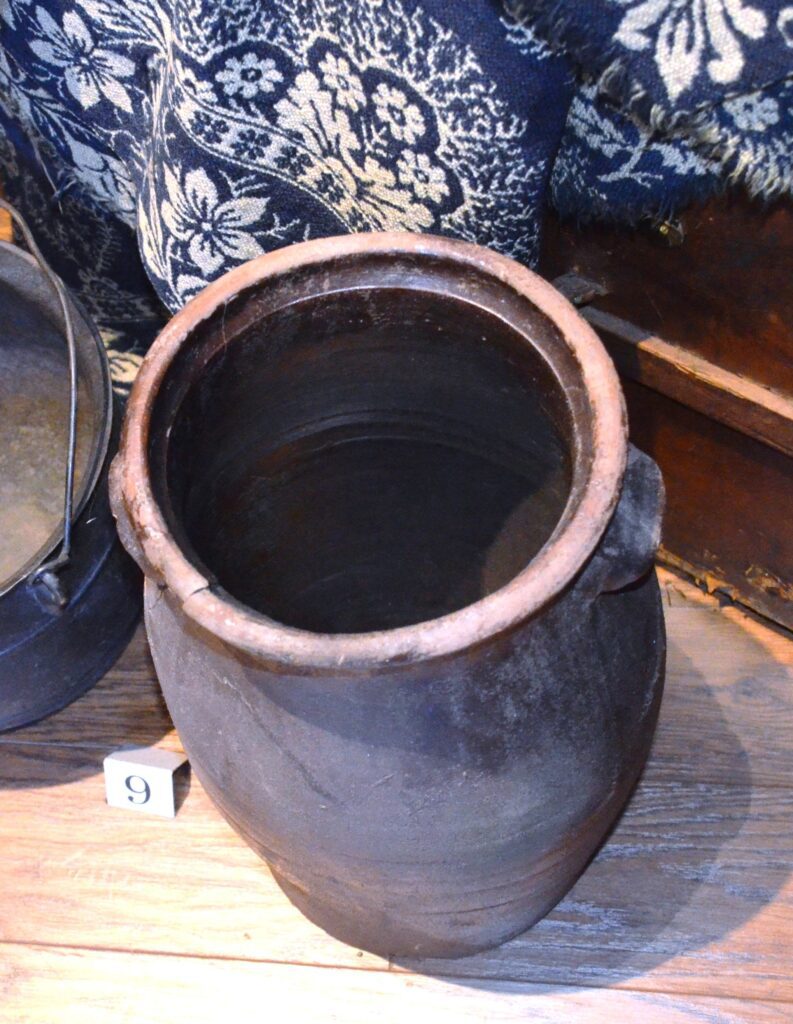
Mary Ellen’s father was a renowned Reverand in southern Oregon and it was his desire to preach in the far territories that drove him to take his family across the Oregon Trail. Interestingly, this strong religious background to her family is barely touched in Bound for Oregon. Her father succeeded in his quest, becoming part of the active Christian movement in Oregon, as outlined in Jerry Rushford’s “Christians on the Oregon Trail“.
One of those sweet moments when a father can spend time with a daughter. One of those moments where we get to make a discovery. And one of those moments when it’s clear that homework has personal relevance. The photo not shown here, the one that’s in my mind only, is the one of how her eyes lit up when I told her Mary Ellen was her cousin. I’m pretty sure the Oregon Trail lesson will stick.
Bound for Oregon is available on Amazon and through my online store –