
The 1845 wagon trains to the Oregon Territory were significant for several reasons. Immigrants had been making their way to the new territory in the ten years prior to 1845. their numbers were small, their endeavors more exploratory, but importantly they laid the foundation for what was to come, and to the quiet evenings of our ancestors.
The 1845 train came like the bursting of an ice dam on a river. Over two hundred wagons, more than a thousand people and thousands more cattle and horses made the trek in the summer of 1845. They were led by many recognizable men: Captain William G. T’Vault, Captain Solomon Tetherow, Capt. Presley Welch, Capt. Samuel Parker, Capt. Samuel K. Barlow, and Stephen H.L. Meek as just a few of the very prominent names in Oregon’s early history.
A number of books, diaries, and other sources speak to the 1845 journey, notably, “The Brazen Overlanders of 1845” by Donna Wojcik Montgomery, “The Terrible Trail – The Meek Cutoff” by Keith Clark and Lowell Tiller, and “Memories to Histories – The Recollections of Benjamin Franklin Bonney” by this author.
This first great wave settled primarily in the NW corner of what would become Oregon, bounded by the Columbia River to the north, the Pacific Ocean to the west, the Willamette River to the east, and the southern portion drifting down through the verdant Willamette Valley.
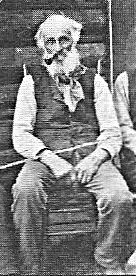
Among the many was Thomas Peter Jackson, 1814-1905, and three of his brothers. His father would stay behind caring for their ailing mother, and after she passed, he joined them in 1852. As many did, Thomas went into Clackamas County near present day Mollala, established his claim to land, and with his wife Tanzy, raised family and crops.
In “Memories to Histories” I wrote about the “reverse wave” of immigrants that settled in the Willamette Valley and then packed their wagons to move eastward. Thomas’s son Joseph was part of that wave in the late 1890s and found himself in eastern Oregon where his land patent shows him staking a claim on land midway between Long Creek and Hamilton.
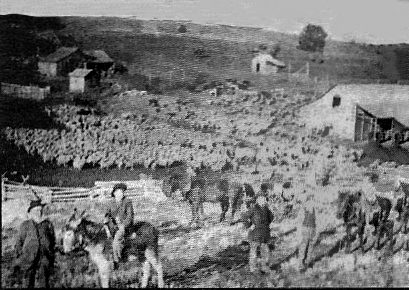
The photograph is badly degraded but behind the family are countless sheep, Grandpa Thomas is recognizable on the left, Joseph’s wife Josephine is on horseback right. The Jackson family would become part of the fabric of early ranches in the Long Creek and John Day Valley area. His brother Abner was also part of that “wave”, settling his family within the John Day Valley. And there, they scraped a life and legacy in the history of Oregon. Sadly, Joseph’s life there was short, and he died in 1909 at the age of 52.
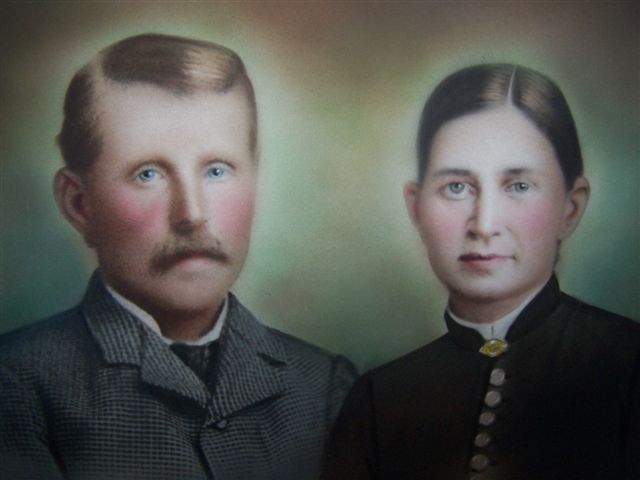
The story of Joseph and Josephine is not so different than many of the families that chose eastern Oregon as their home. The isolation, the backbreaking work, the joys of family, the pure endurance and fortitude it took to build a life. With Joseph’s death, Josephine and their four children carried on. The 1910 Census shows three others in her household listed as “servants”, essentially farm hands helping with all the chores. There are so many stories about the hardships of pioneering life it is sometimes difficult to imagine the joys. Our view is no doubt colored by our own lives 150 years later with our access to so many distractions.
Evenings after chores were filled with different joys back then, a good book, music, conversation. Many of the activities were just an extension of maintaining a home, repairs that need to be done, schooling of the children, mending of clothes, or crafts that were done to adorn the home or create a toy or gift. But the isolation did not keep them from cultivating their own interests, from learning about what was going on in the world or being unaware of new ideas. Reaching the end of the Oregon Trail did not mean they had left their hobbies and interests behind. There is no better example than in learning about Josephine’s own skill in embroidery, or what was termed “fancywork.” But Josephine took it to the next level.
Practical needlework (also called tatting) was a necessary skill, not only for repairing well-worn clothes, but also for making clothes for the whole family. These skills were typically passed down from mothers to daughters.
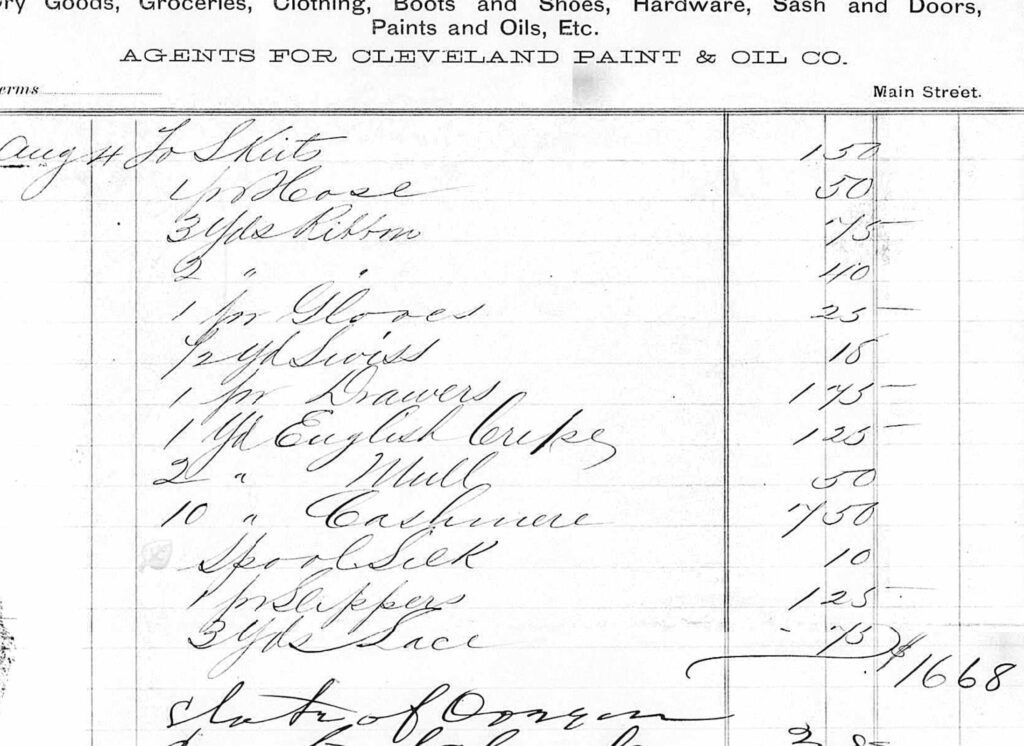
Josephine’s mother passed away in 1890 and within her probate records of personal belongings, besides a few cows that were sold to pay for probate and her burial, these were the only possessions listed:
Two skirts, 1 pair hose (stockings), 3 yds ribbon, 2 yds ribbon,1 pair gloves, 1/2 yard Swiss (flannel), 1 pair drawers, 1 yard English crepe, 2 yards Mull(ein) (muslin), 10 yards cashmere, 1 spool silk, 1 pair slippers, 3 yards lace.
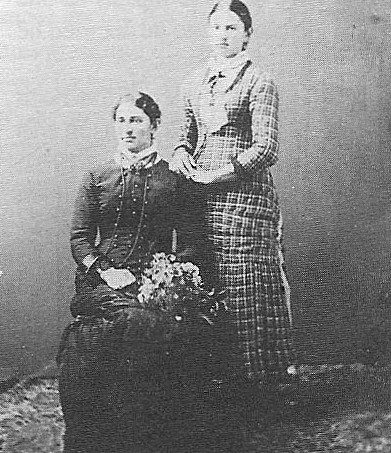
It is not hard to imagine that Josephine acquired her mother’s linens, silks, and lace, adding them to her own collection of materials. And in those quiet evenings of needlework, there was one moment where she took up a lock of her mother’s hair and began tatting the memento seen below.
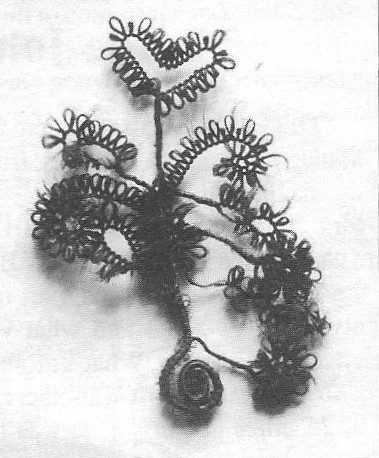
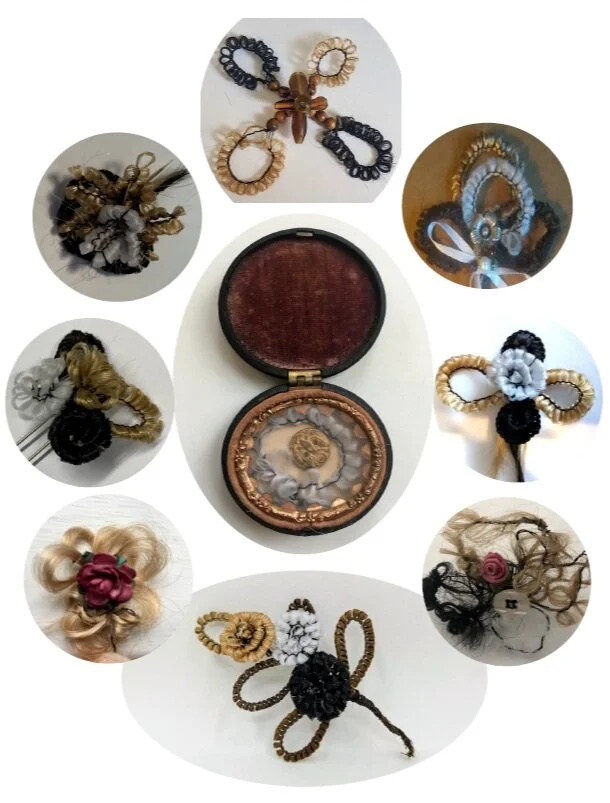
The curious Victorian practice of making art pieces from human hair has a deep history but blossomed during the reign of Queen Victoria, who had deeply mourned her husband Prince Albert and kept a tatting made from his hair. “The Victorian era was rife with unique and often unsettling artistic expressions, with hair art standing out as one of the most intimate and macabre forms. Hair art, which involved creating intricate designs, jewelry, and decor from human hair, was particularly popular as a form of memento mori—objects intended to remind the living of their mortality. This unusual art form served not only as a way to commemorate loved ones who had passed but also allowed Victorians to keep a part of them physically close. As morbid as it may seem today, hair art was cherished and deeply personal, combining artistry with poignant sentimentality in ways that still fascinate historians, collectors, and art enthusiasts alike” (The Macabre World of Victorian Hair Art: A Fascinating Look at Memento Mori).
Indeed, the craft was so popular that numerous publications were available to learn how to create your own. Weldon’s Practical Tatting, published in 1889, was a popular guide to technique and patterns (An Introduction to Victorian Tatting from Weldon’s | PieceWork). Even today one can find guides to learning this artform yourself (https://www.craftingcommunities.net/hair-art).
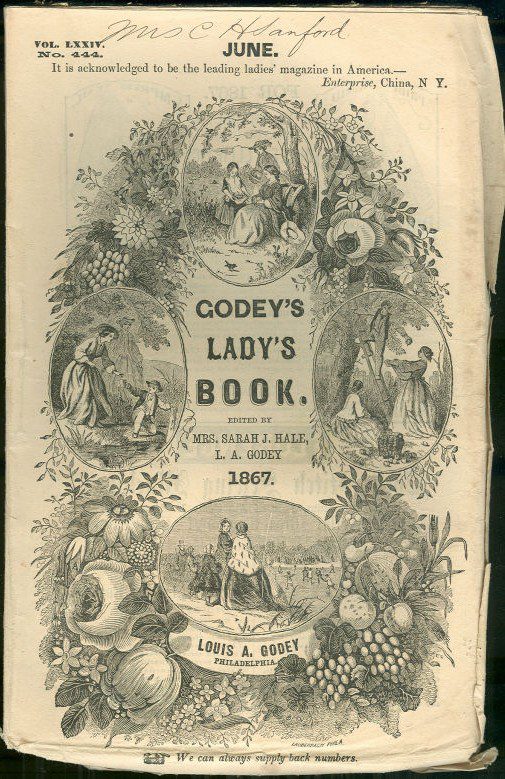
One publication, which possibly Josephine was aware, was Godey’s Lady’s Book, of which the 1867 cover is show at the head of this story. In 1860 its publisher, Louis A. Godey, had 150,000 subscribers, a remarkably high number in those times, making it the most widely circulated magazine in the period prior to the Civil War.
The Lady’s Book contained poetry, articles by renowned writers, engravings, along with advice on current fashions. Sarah Josepha Hale (author of Mary Had a Little Lamb) was its editor from 1837 until 1877 and only published original, American manuscripts. Beginning in 1853, almost every issue also included an illustration and pattern with measurements for a garment to be sewn at home. (https://en.wikipedia.org/wiki/Godey%27s_Lady%27s_Book)
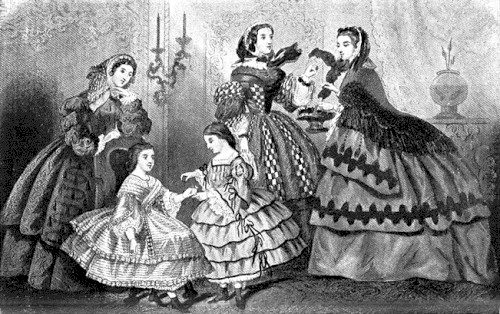
The Lady’s Book would also have had guides to “fancywork”, and no doubt found its way into the hands of early pioneering women on those isolated ranches of eastern Oregon. The Book’s main intent was to educate women. In those quiet evenings after the hard toils of the day, magazines such as this would have been read, garnering the latest news on household tips, fashion, stories by Edgar Allen Poe and other prominent authors, and tips on crafts like hair tatting.
By the light of tallow candles, fingers lovingly weaving hair into a memento, which kept her mother near.
Author’s note:
The photo of Josephine’s sample of hair tatting was an unusual find. In decades of family research, hundreds of families, and thousands of old photographs, it was the first time I had ever encountered such a photograph. The photograph has been shared across a number of Ancestry family sites, the original family member who had the photo is unknown. Whether Josephine’s hair tatting still exists is also unknown. But just the photograph itself is a unique passageway into the life of an ancestor. When we reach further into the lives of our ancestors, rather than simply building family trees, we can sometimes come to know them better, to more accurately imagine the life they led, and to better understand them as a person, and how that person led to us.
It would be interesting to see if there are other examples of hair art still held by descendants of our early pioneering women. If you have such an object, tucked away in a cedar chest in the back room, I will enjoy sharing a photograph of it, along with its story, as an addendum to Josephine’s story. Please send to mark@oregontrailgenealogy.com