
There is no question that my writing has been skewed towards the Oregon Trail and families that settled in the Pacific Northwest. The arduous journey across the Trail, and the struggle to build a home and life in the new territory serve the telling of amazing stories.
But all of us have that “other side of the family”, the ones who immigrated from their homeland, making their way to different parts of the awakening United States. Such is the case of my maternal lineage, those Norwegians who were part of a great exodus which peaked in the 1880s, with tens of thousands leaving Norway and crossing the ocean to America.
With a bit of embarrassment, I admit to neglecting the stories of that side of my family, for their struggles to establish a life were no less amazing than the pioneers who walked the Trail to Oregon, built a cabin in isolation, and eked out a life from the wilds. When I came across the story of my second great-grandaunt I realized the stories were the same – tenacious, hard-working, determined immigrants who sought to build a better life for themselves and their families. And so, the unimaginable story of a little sod house in a treeless landscape of the Dakotas.
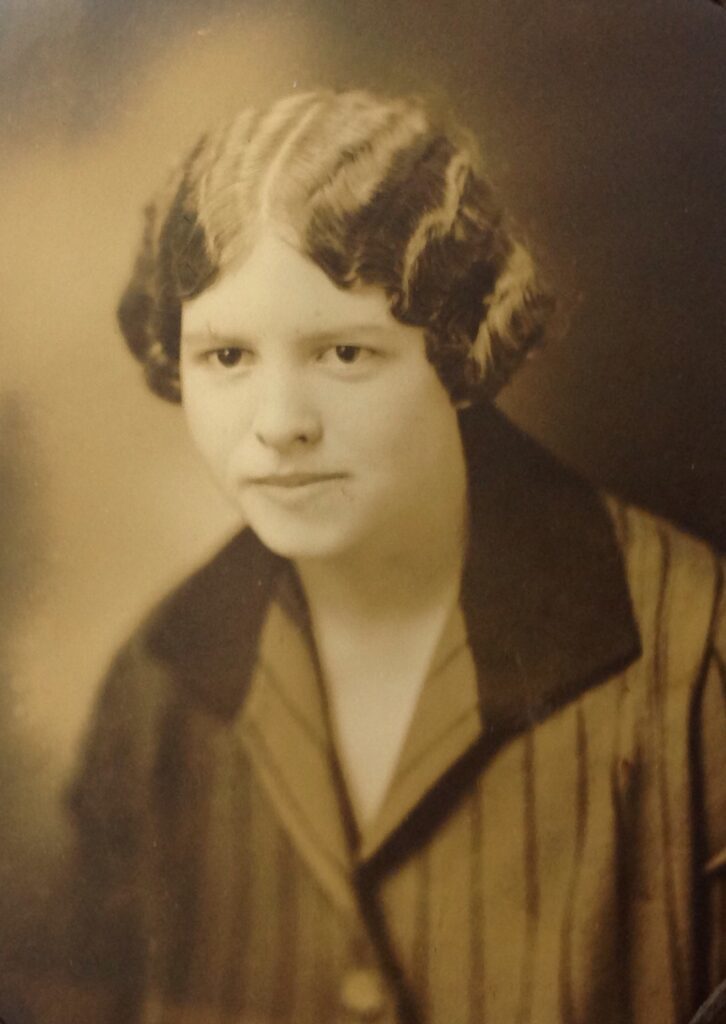
The Life of Helga Oldstater Navelsaker Aasby: A Homestead Biography
Helga Oldstater Navelsaker was born in Norway on June 20, 1861, the youngest of six children—five daughters and one son. Her family lived on the Navelsaker estate, a property that had carried the same name for several centuries. Her father, an army captain, died when she was still young, and her mother and only brother remained in Norway for the rest of their lives. Helga believed her mother lived to nearly ninety (her mother died in 1907 at the age of 84. Helga never had the opportunity to return to Norway and connect with the family she had left behind).
In April 1881, at the age of twenty, Helga left Norway accompanied by her sister Olene and a nephew. They sailed to Minnesota, where three of her older sisters had already settled near Benson. Upon arrival she adopted the name Helga Olson, lived among her many relatives, and immediately set herself to learning English. She studied schoolbooks, worked wherever she could, and eventually moved to Minneapolis for employment.
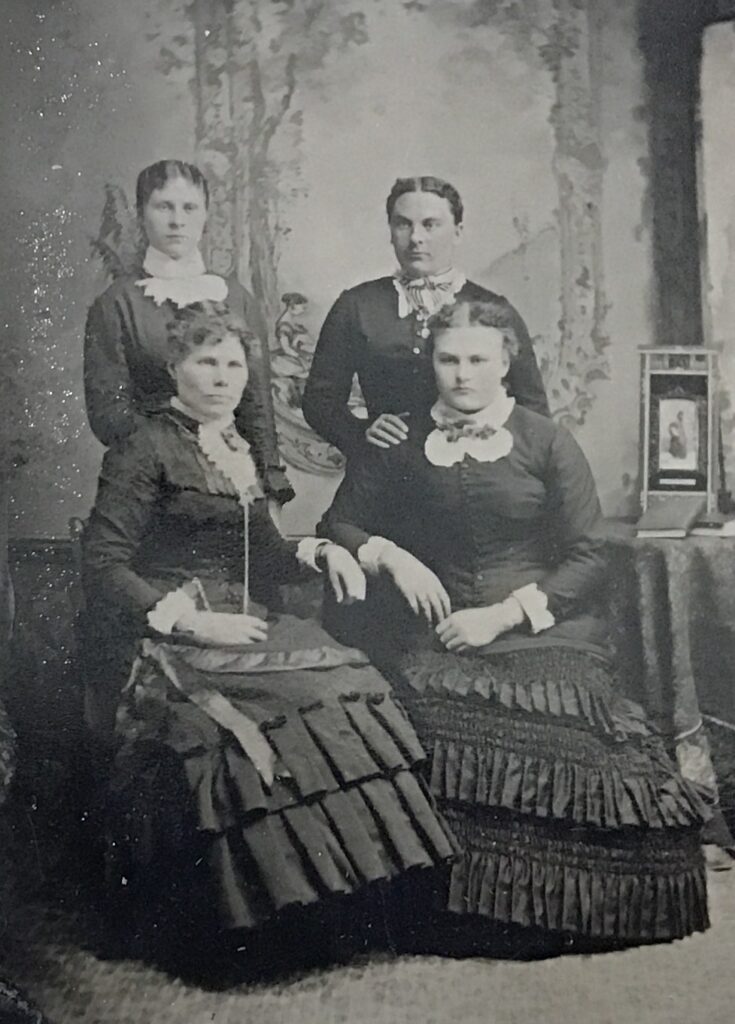
It was there, on April 17, 1886, that she married Hans Aasby, in a ceremony performed by Lutheran pastor Reverend Jerjerson. Hans Peder Aasby, was one of the pioneer homesteaders of Hyde County, South Dakota. He was born July 1, 1852 in Bergen, Norway to Peder O. Aasby and his first wife, Brita. Hans had completed his military obligation and had gone through an unsuccessful business venture before deciding to come to America.
He, along with the girl who would become his future wife, Helga Olson, had arrived at Port Huron, Michigan, May 29, 1881. Once married, Helga remained with relatives in Minnesota while Hans traveled west to his homestead claim in South Dakota, located three and a half miles north of Holabird in Loomis Township.
Life in the Sod House
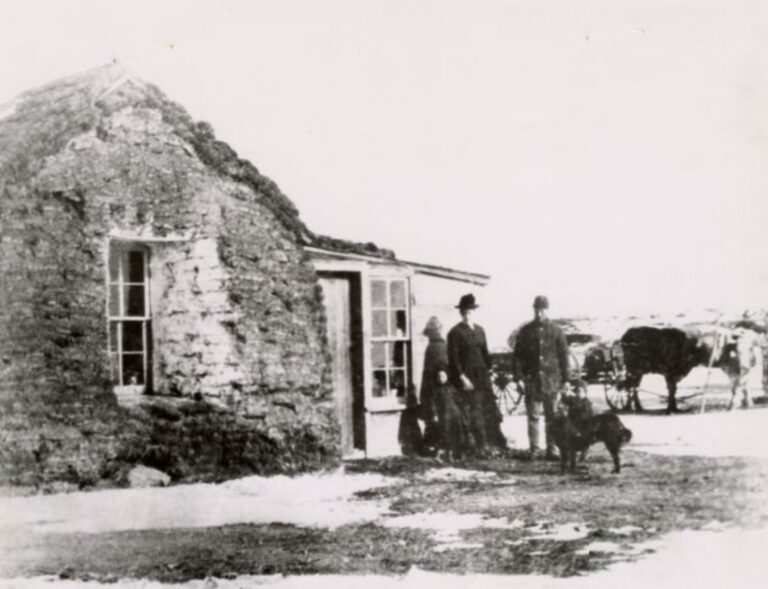
Hans built a one‑room frame house whose exterior walls and roof were reinforced with two feet of sod. It had a window to the south, a door to the east, and another to the northwest. Inside were only the essentials: a handmade table, a bench, and a straw‑filled mattress. When Helga finally joined him, she brought her spinning wheel from Norway, her sewing machine from Minneapolis, and a trunk filled with clothing and household goods.
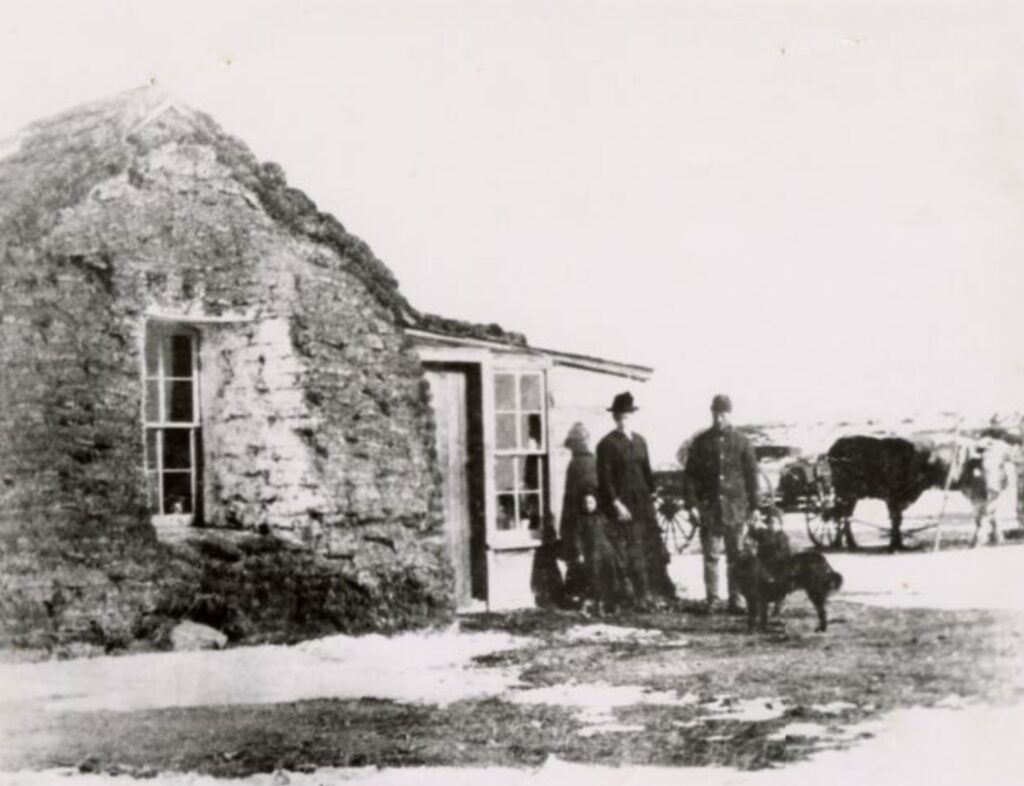
note the thickness of the walls
The first winter was harsh. With no wood available, they burned twisted hay for fuel, storing it in one end of the sod barn. Later, a small lumber‑built room was added to the east side of the sod house, though it remained unheated. Water could not be found on their own quarter, so Hans dug a well by hand on the neighboring quarter to the west. The well produced soft, abundant water and continued to be used for decades.
Life on the homestead was demanding. The winter of 1888 brought the infamous blizzard that swept across the plains (see The Schoolhouse Blizzard). Helga and baby Marie spent a terrifying night alone in the sod house, unsure whether Hans had been lost in the storm. He had taken shelter at a neighbor’s home, but Helga would not know this until morning. Summers brought their own dangers—prairie fires that could sweep across the grasslands with little warning.
Despite the hardships, Helga cultivated beauty and sustenance around her home. She tended both a flower garden and a vegetable garden, carrying water from the distant well to keep them alive. Wildflowers grew naturally on the sod walls of the house and barn, and the children were strictly instructed not to pick them. By the 1890s the family had wheat stacks, flax, corn, and a thriving garden. Hans plowed with oxen for years and often walked all the way to Highmore for groceries, carrying them home on foot.
Five children were born in the sod house: Marie Olene, Paul Robert, Ole Alfred, Louis Holf, and Ellen Olga.
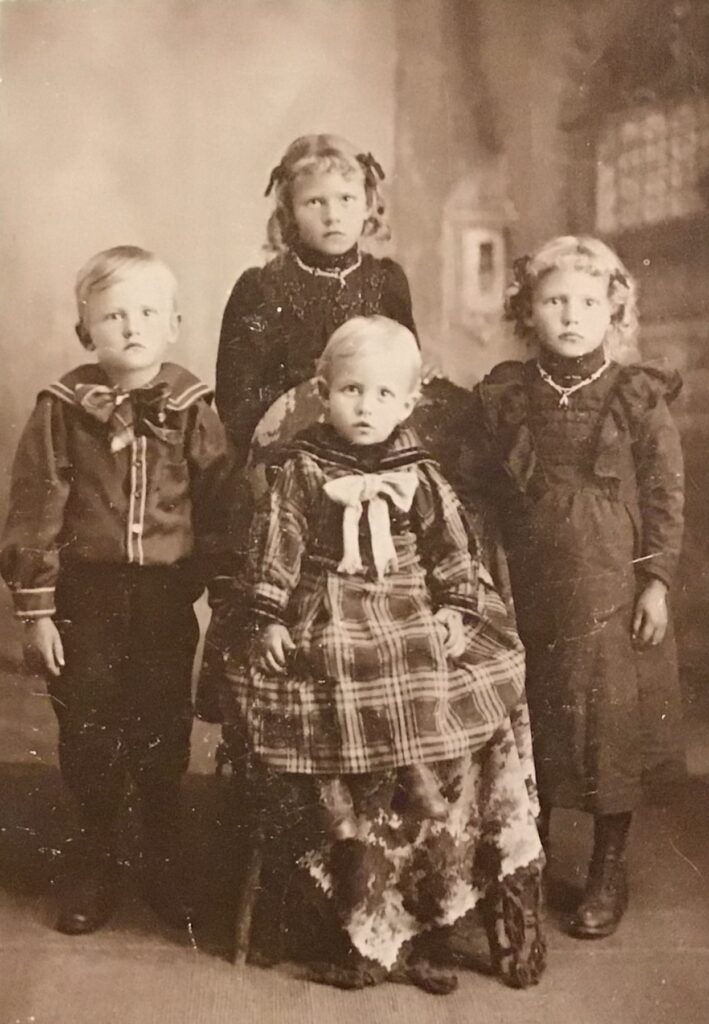
The Move to the Tree Claim
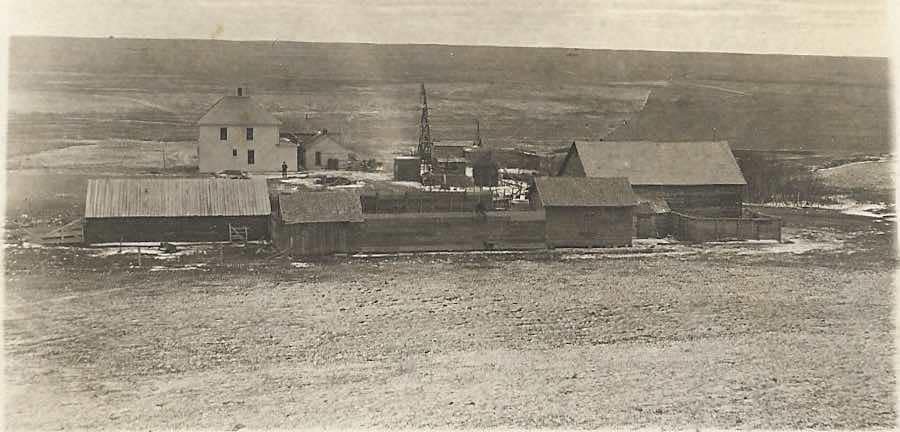
In 1894 the family relocated to a Tree Claim a little more than a mile west (see the Timber Culture Act, passed in 1873 to encourage the planting of trees on barren land). They dismantled the sod‑house structure, salvaging every piece of usable lumber. A house purchased near Holabird was moved to the new site, but again water proved elusive. Four years later a good well was found farther north, prompting the family to move the buildings once more. They remained in that location for the next sixty‑eight years.
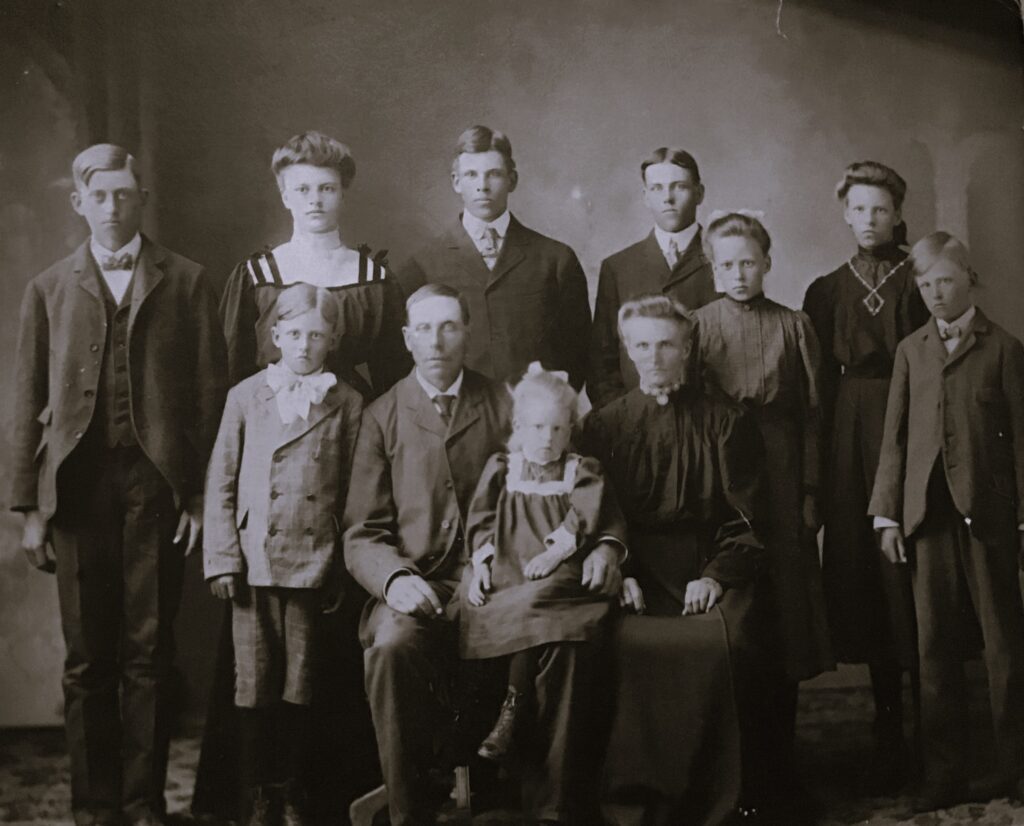
The family grew quickly. Twins Hilda and Henry were born in 1896, followed by Emil August in 1898 and Alma Nelle in 1902. Another set of twins, born in 1901, did not survive. During the 1918 influenza epidemic, little Hilda passed away on November 14.
Work, Storms, and Community Life
The Aasby boys milked many cows, and the family operated a milk house where cream was skimmed after cooling. Butter and cream were sold weekly, and Helga’s butter was especially prized. One evening a small cyclone tore through the farm, blowing away the milk house and shattering most of the large cooling bowls. During the storm, Helga held the south door shut with all her strength, fearing it would blow open. When the wind briefly calmed, Hans and the boys ran from the barn to the house for safety.
Helga sewed tirelessly—pants and shirts for the boys, dresses for the girls—and often maintained a large garden. Community life was lively. Once, she and six‑year‑old Ellen traveled by horse and buggy to attend a surprise birthday party for neighbor Ole Lee. Guests arrived from Holabird, Highmore, and surrounding farms, filling the small house with laughter and food.
Anniversaries, Turkeys, and Travels
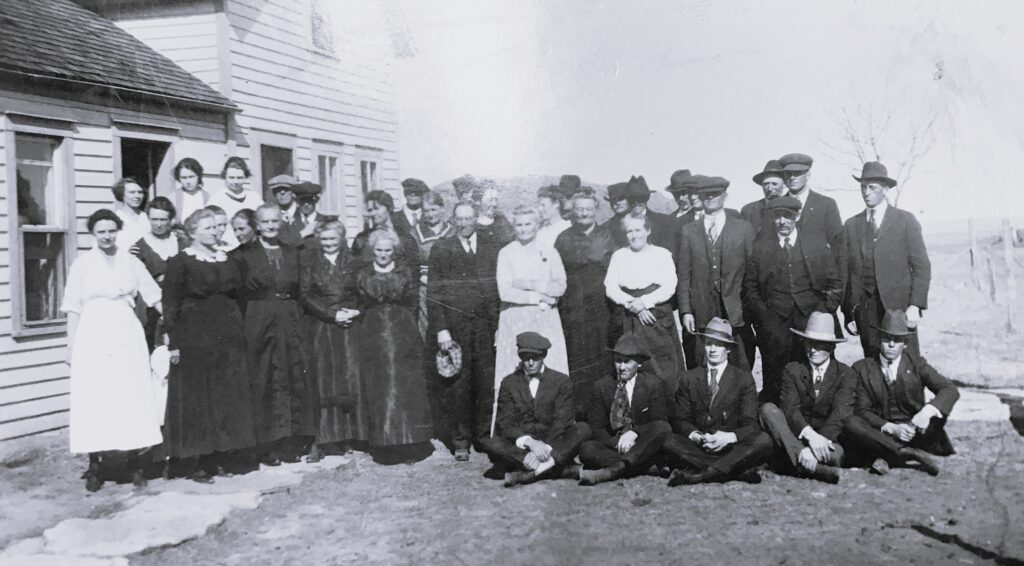
On April 17, 1921, Helga and Hans celebrated their 35th wedding anniversary. Their daughter Mae secretly baked cakes and prepared salads the day before, hiding them until guests began arriving at noon. The surprise delighted both parents.
Helga took great pride in raising chickens and turkeys. In the fall she dressed the turkeys with meticulous care—no torn skin, no bruises—and her birds consistently brought top market prices. Spring brought the busy season of locating nests and tending to hatching.
Around 1927, Ellen purchased a car, opening new opportunities for travel. Helga eagerly planned trips to visit relatives and explore places of interest. She and Hans spent several days in the Black Hills, made visits to Minnesota and Wisconsin, and traveled to Missouri to see Roy and Alma MacDonald. On one trip they crossed a flooded bridge without realizing the danger until later.
Later Years in Highmore
In 1928 Helga and Hans moved into the town of Highmore, purchasing a home and enjoying the companionship of many friends. They looked forward to celebrating their Golden Wedding Anniversary in 1936. But in July 1935, after a brief illness, Helga passed away at the hospital in Pierre. Hans suffered a stroke two years later and died in March 1938 after several months of confinement.
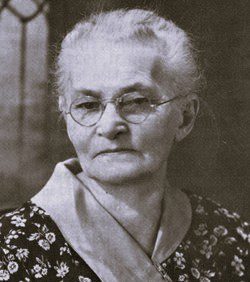
20 Jun 1861 Navelsaker Brnr2 Hornindal Sogn og Fjordane Norway
26 Jul 1935 Pierre Hughes Co South Dakota
Sources:
Photos from author’s family collection
Story edited from family account, author unknown, original seen at South Dakota State Historical Society